


2014-04-15 more
2014-04-01 more
2014-03-07 more
2013-12-01 more
3. FGH Prize - Finalist Exhibition 2013-11-10
ARTISTS: Michał Hyjek, Kornel Janczy, Magdalena Lazar, Dominik Ritszel, Natalia Wiśniewska
Curator: Małgorzata Mleczko
The Grey House Foundation will unveil the work of the finalists for the FGH Prize: Contemporary Art Award in a group exhibition taking place November 15 – December 25, 2013.
Opening and ceremony of the announcement of the winning artists –
29.11, 7pm.
Michał Hyjek’s works are interactive installations: traditional in form, modern in content. His pouffe (‘La Puf’) looks like one of the thousands of tacky tuffets that plagued Polish homes in the late 1980s and early 1990s. Using the fact that a pouffe is indeed a resonating sound box, Hyjek turns one such grey-brown-purple horror into a fascinating suede-clad sound machine. Kornel Janczy shows very subtle and visually strong works in the competition exhibition. The artist uses objects that we know well from our everyday lives: glass, flour, or ping-pong balls. What he does with them entirely changes their meaning and the message they send to the world. He transforms flour into mountain slopes, turns an athletic toy into a sophisticated game without an express resolution, and a transparent pane of glass becomes an element depicting space.
Similarly, the ploy of changing meanings is employed by Natalia Wiśniewska. Her works resemble haiku: poetic, humorous and versified, but also involving a strong visual element. Word and image interoperate perfectly here. They cause a slight confusion in the viewer’s mind. The artist also plays on our visual illusions and deeply-rooted stereotypes. Wiśniewska makes us wonder about the principles that are universally taken for granted. After all, grass does usually grow on land, and immortality is one of man’s timeless desires. Magdalena Lazar takes us to a different world. She literally forces us to start ‘wandering’. The journey that the viewer is sent on is akin to the one taken by the heroine of the story. It is a sweeping experience: between adventure and escape; between reality and dream. Dominik Risztel is also telling a tale. He weaves an intimate narrative of the everyday, about home and loneliness, about reaching into the unknown and overcoming one’s own fears. It is a sensual story combining tremendous visual sensitivity with music, which further strengthens the impact of his work on the viewers’ emotions.
more
Surreal band in Szara Kamienica gallery 2013-10-03
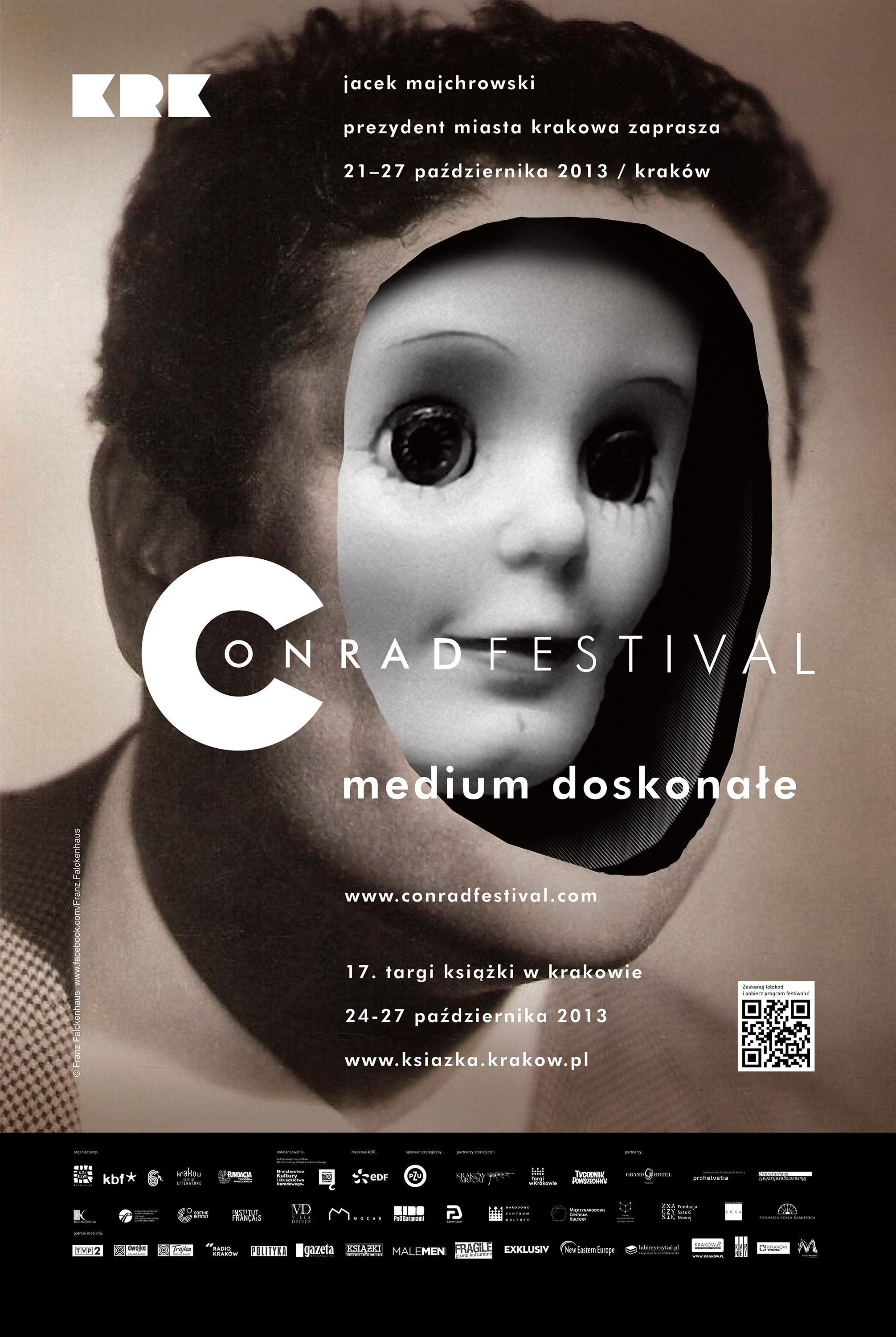
Conrad Festival 2013: Conspirators of the imagination
Artists: Selena Kimball, Andrzej Klimowski, Mieczysław Wasilewski, Josh Backer, Marcin Giżycki
Exhibition: 21.10 - 05.11
Exhibition launch: 22.10 godz. 17:00
Curator: Agnieszka Taborska
Agnieszka Taborska
Writer, art historian, and specialist in Romance studies. She published The Dreamy Life of Leonora de la Cruz (translated into English and French), Topor’s Alphabet, American Crumbs, Conspirators of Imagination. Surrealism, and translations of Philippe Soupault’s, Gisèle Prassinos’, and Spalding Gray’s books. Her fairy tales for adults and children have appeared in Poland, Germany, Japan, and Korea. Since 1988, she has been dividing her time between Warsaw, Poland and Providence, USA, where she lectures on art history at the Rhode Island School of Design. In 2013, her latest publication came out, entitled Nie tak jak w raju – a collection of notes, anecdotes, observations, and short autobiographical stories in a pared-down form.
Organizers: Krakow Festival Office, Tygodnik Powszechny Foundation
http://www.conradfestival.pl/pl
more
BAD DOGGY in Szara Kamienica Gallery 2013-09-27
Dominika Szczałba, BAD DOGGY
Szara Kamienica Gallery
Opening: 3.10.2013, godz. 19:00
Exhibition: 4.10 - 19.10.2013
Curator: Kaśka Maniak
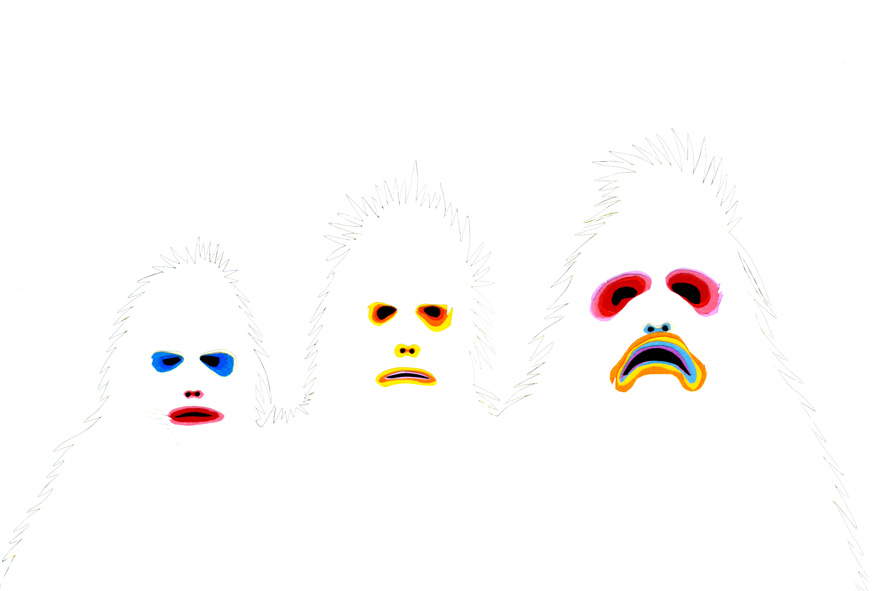
Dominika Szczałba wants to figure out the world and since she likes to work a lot, she might just have a chance. She efficiently moves around reality, which combines a couple of iced newly-weds, dogs biting each other, a run-down duck and colorful bouquets of flowers. The world she introduces seems to have no beginning and no end, however it manifests itself in specific frames. The order of a fast and easy pop culture is contrasted not only with a surprising and often brutal content that has been picked out of it, but also with an exceptionally precise and elaborate way of converting images. The multitude of techniques - such as collages, drawings, intaglios or the use of crêpe paper – corresponds with a diversity of content and the combinations they create.
BAD DOGGY is a result of processing cultural material, using its visual expressions and subjectively chosing those most symptomatic. The crucial part is played by the detail, which is brought out by both the texture, the matter of the painting, as well as a cultural landscape; for the devil (BAD DOGGY) is in the detail.
 |
  |
 |
more
2013-09-21 more
2013-09-15 more
« previous | 9 | 10 | 11 | 12 | 13 | 14 | 15 | 16 | 17 | 18 | next »